
Business Phone Systems (VoIP)
From desk phones to an office phone system and from VoIP to video conferencing, LBMC can elevate your business to the next level, as your team members will connect in a way never before experienced through integrated communication technology. Whether on premise or in the cloud, the unified communication platform that you select will set your team up for success beyond standard phone systems. The days of relying solely on analog phones (a landline phone), have come to an end. With new features being released, like caller ID, wi-fi calling and phone VoIP technology it may be time to upgrade your telephone networks. Unlimited calling and instant messaging on your cell phone used to be the best part of a phone system, but with LBMC’s VoIP services we can turn your office phone system into one of the best tools in your organization.
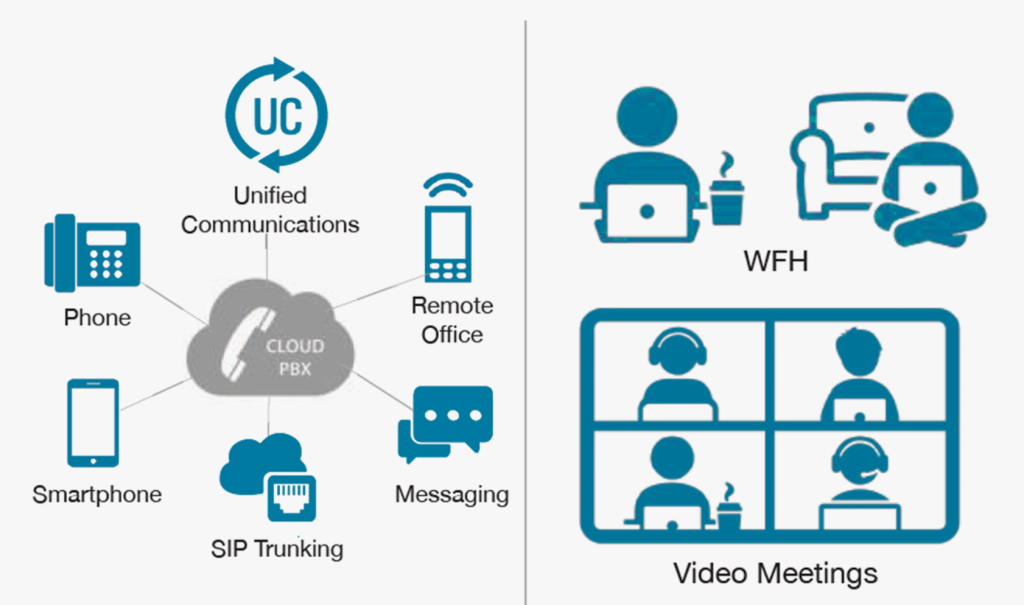
What Are Business Phone Systems?
Business phone systems, also known as business communication systems or business telephone systems, are a set of hardware, software, and telephony technologies that enable organizations to manage and facilitate communication within and outside the business premises. These systems provide a dedicated and reliable means of voice communication for businesses of all sizes, ranging from small businesses to large enterprises.
Business phone systems offer various features and capabilities to enhance communication efficiency and productivity.
- Private Branch Exchange (PBX): PBX is the central switching system that routes incoming and outgoing calls within the organization. It allows internal users to connect with each other and provides connections to external phone lines. PBX systems can be physical hardware-based or virtualized through software.
- Desk Phones: These are the traditional telephone devices placed on desks or workstations. They provide voice communication capabilities and often have features like call forwarding, conferencing, voicemail, and programmable buttons for quick access to frequently dialed numbers or features.
- VoIP (Voice over Internet Protocol): Many modern business phone systems utilize VoIP technology, which transmits voice calls over the internet instead of traditional phone lines. VoIP offers cost savings, scalability, and a wide range of features, including video calling, instant messaging, and integration with other communication tools.
- Unified Communications (UC): Unified Communications solutions integrate various communication channels, such as voice, video, messaging, and collaboration tools, into a single platform. UC systems enable seamless communication across different devices and channels, improving productivity and collaboration within the organization.
- Auto Attendant: An auto attendant is an automated system that greets callers and provides them with a menu of options to direct their calls to the appropriate department or extension. It helps manage incoming calls efficiently, reduces the need for a dedicated receptionist, and improves call routing.
- Call Management Features: Business phone systems offer a range of call management features to enhance call handling and productivity. These include call forwarding, call transfer, call waiting, call recording, caller ID, call queuing, and voicemail.
- Conferencing and Collaboration: Business phone systems often include audio and video conferencing capabilities, allowing participants to join virtual meetings from different locations. Collaboration features like screen sharing, document sharing, and chat enable real-time collaboration and teamwork.
- Mobile Integration: Many business phone systems support mobile integration, allowing employees to use their smartphones as extensions of the office phone system. This enables remote work capabilities, seamless call routing, and access to business phone system features on mobile devices.
- Reporting and Analytics: Business phone systems can provide reporting and analytics tools to track call volume, call duration, call quality, and other performance metrics. These insights help businesses optimize their communication processes, improve customer service, and make data-driven decisions.
Business phone systems are essential for efficient internal and external communication within organizations. They enable reliable voice communication, streamline call management, improve collaboration, and enhance customer service. The choice of a business phone system depends on the specific needs and size of the organization, as well as the desired features and integration capabilities.
Ready To Make The Call About Your Phone System?
What are the Benefits of VoIP Phones?
VoIP phones, also known as IP phones or VoIP-enabled phones, are telephones that use Voice over Internet Protocol (VoIP) technology to transmit voice calls over an IP network, such as the internet or a local area network (LAN). Unlike traditional analog phones that rely on dedicated phone lines, VoIP phones convert voice signals into digital data packets and transmit them over the IP network.
Here are some key characteristics and features of VoIP phones:
- Digital Voice Transmission: VoIP phones convert analog voice signals into digital data packets using a codec (coder-decoder). These packets are then transmitted over the IP network in real-time. At the receiving end, the packets are reassembled into voice signals for the recipient to hear.
- Connectivity Options: VoIP phones can connect to the IP network through various means, including Ethernet cables, Wi-Fi, or even cellular networks (when using mobile VoIP apps). They typically have Ethernet ports to connect directly to the local network infrastructure.
- Integration with VoIP Systems: VoIP phones are designed to work seamlessly with VoIP systems or IP-PBX (Internet Protocol Private Branch Exchange) systems. These systems handle call routing, call management, and provide various features and services such as call forwarding, voicemail, call transfer, conferencing, and more.
- Power Over Ethernet (PoE) Support: Many VoIP phones support Power over Ethernet, which means they can receive power and network connectivity through a single Ethernet cable. This simplifies installation and eliminates the need for separate power adapters for each phone.
- Display and User Interface: VoIP phones often have built-in displays that provide a graphical user interface (GUI) for easier navigation and access to phone features. The displays can show caller ID, call logs, voicemail notifications, and allow users to interact with menus and settings.
- Additional Features: VoIP phones can offer a wide range of additional features, including call hold, call waiting, call forwarding, speed dial, conference calling, caller ID, call park, intercom, and more. Some advanced models may also have built-in cameras for video calling or support for Bluetooth connectivity.
- Mobility and Softphone Support: In addition to physical VoIP phones, VoIP technology enables softphones, which are software applications installed on computers or mobile devices that simulate phone functionality. Softphones allow users to make and receive VoIP calls using their devices, turning them into virtual VoIP phones.
- Cost Savings and Scalability: VoIP phones offer cost savings compared to traditional phone systems as they utilize existing IP networks, eliminating the need for separate voice infrastructure. They also provide scalability, allowing organizations to add or remove phones easily as their needs change.
VoIP phones have become increasingly popular due to the flexibility, cost savings, and advanced features they offer. They are commonly used in business environments that have adopted VoIP technology, enabling efficient and cost-effective communication over IP networks.
Schedule Some Time To See The Full Benefit
Types of VoIP Phones
Here are some common types of VoIP phones:
- Hardware IP Phones: These are physical phones designed specifically for VoIP communication. They resemble traditional desk phones and connect directly to the Internet or a local network. Hardware IP phones often have built-in features such as LCD screens, buttons, and speakerphones.
- Softphones: Softphones are software-based applications that enable VoIP calling from computers, laptops, smartphones, or tablets. They function as virtual phones, using the device’s microphone and speakers (or headphones) for communication. Softphones are popular for remote workers or individuals who prefer a more flexible calling experience.
- Wireless IP Phones: Wireless IP phones provide mobility within a specific range, typically using Wi-Fi or DECT (Digital Enhanced Cordless Telecommunications) technology. These phones are suitable for environments where users need to move around freely while staying connected to the VoIP network, such as office spaces or warehouses.
- Conference IP Phones: Conference IP phones are designed for group audio conferencing. They have built-in microphones, speakers, and advanced audio processing features to facilitate clear and high-quality conference calls. Conference IP phones often include additional capabilities like call recording, expansion microphones, and support for multiple lines.
- Video IP Phones: Video IP phones combine voice communication with video conferencing capabilities. They feature built-in cameras, displays, and audio equipment to facilitate face-to-face video calls over the Internet. Video IP phones are commonly used in business settings where visual communication is essential.
- Analog Telephone Adapters (ATAs): ATAs are devices that allow you to connect traditional analog telephones to a VoIP network. They convert the analog signal from the phone into digital data that can be transmitted over an IP network. ATAs are useful for individuals or businesses transitioning from legacy phone systems to VoIP.
It’s worth noting that some VoIP services may also offer mobile apps that turn smartphones into VoIP phones, allowing users to make calls using their mobile data or Wi-Fi connection.
The availability and features of these different types of VoIP phones will vary depending on the specific brand, model, and VoIP phone service provider you choose.
Switchvox (Unified Communications UC)
Elevate your business phone system with Switchvox, a powerful, ready-to-use phone system that offers best-in-class functionality and user-friendly interface at a fraction of the cost. With both on-premise and cloud solutions, these systems provide many products in one package. Get mobile apps, call recording, desktop faxing, ACD, presence all in one.
Improve your customer experience with your phone system – it will go a long way toward improving bottom line. There are many factors that can affect a customer’s experience while on the phone with your team, such as waiting on hold, poor call quality, and inability to connect with the right person or department. Switchvox enhances the customer experience by providing call reporting, Barge, Whisper and Monitor options.
Benefits of Switchvox
- Robust Call Reporting – Gain valuable insights with on-demand custom reports that show how your business is handling call volume. Reports include details on abandoned calls, redirected calls and detailed call logs.
- Monitor, Whisper, & Barge – These options allow you to do just that – Monitor, Whisper and Barge in on calls to make sure your team are working as they should.
- Salesforce Integration – If your organization needs to focus on improving customer service, it’s even better when your phone system can integrate with your CRM system. This Unified Communications advantage allows you to integrate with Salesforce or SugarCRM to give your business the advantage it needs.
- Interoperability – We understand the importance of maximizing IT investments. For budget-conscious decision makers, preserving a connection to a legacy IP PBX is important as they plan to transition to a UC system. VoIP Gateways can be used to take those next steps in connecting legacy PBX systems.
A VoIP business phone system needs to help you do more than answer phone calls. With unified communications you get advanced features, you can connect staff and patients in minutes, respond faster, have patient data at your fingertips from your office or from your mobile phone.
Avoid the bottleneck of appointment scheduling, prescription refills, and patient phone calls. Unified communications can help route and organize incoming calls keeping the office running smoothly at all times. Check out our e-book and see how LBMC Technology Solutions and a phone VoIP with Switchvox can improve your office communication.
Telephony Gateway
Whether digital or analog, telephony gateways play an important role in the way your unified communications system connects to the outside world. These gateways can be rolled out as part of a large deployment or added to current solutions. Offered as both on-premise and cloud based solutions, Telephony Gateways are the instrument in which to bring video and phone solutions to users of your organizations, no matter where they may be.
Benefits of Telephony Gateways
- Accessible – Allows service to remote sites
- Adaptable – Can be added to existing system
- Flexible – Available as on-premise or cloud based
SIP Trunking
When looking for a reliable and cost effective phone system for your organization, SIP Trunking is definitely the way to go. LBMC offers feature-rich SIP trunking services that utilize a standard internet connection to link up with traditional phone lines. With this option, companies can reduce monthly costs and easily grow their organizations. This minimizes the hardware and wiring components of phone systems and makes them very easy to install, move, and utilize.
Benefits of SIP Trunking
- Lower IT costs – Better service and more functionality at economical pricing
- Easily scalable – A system that grows with your business
- Reliability – More reliable than standard phone systems
Fax Solutions
We may not be living in the 90’s anymore, but fax solutions are still a necessary piece of business communication, especially when sensitive data is involved. As times have changed, so have the options for faxing solutions. Gone are the days when a fax will sit on the machine and wait for someone to come and pick it up. With the modernization of faxing, companies now have increased efficiency and scalability when it comes to faxing solutions. Add in the fact that these solutions can save your organization money, and you’ll be wishing you had these capabilities back when you were preparing for Y2K.
Benefits of Fax Solutions
- Increased security – peace of mind for your most sensitive data
- Economical – save your organization money with more functionality
- Remote capabilities – cloud functionality makes faxes accessible from anywhere
Learn More About How SwitchVox Can Help You
Cloud Hosted Unified Communications
Benefits of Cloud Hosted Unified Communications
- Integration – Integrates with your favorite office apps, from Salesforce to Office 365
- Cost Savings – Save money by using with existing PBX equipment
- Mobile – Taking your communications to the cloud means that it can go anywhere you go
- Scalable – As businesses grow, these solutions can grow with them for little cost
Additional Unified Communications Products and Services (VOIP & Others)
- VoIP Visual Alerts: Relay telephone, emergency, safety, and security events with VoIP Visual Alert systems. From strobe lights to LED indicator lighting, LBMC Can assist with a variety of non-auditory alerting systems.
- Overhead Paging Solutions: Overhead paging systems integrate with your VoIP phone system to allow extra depth to the capabilities of the users. Standard speakers, horn speakers, and audio alert systems are among some of the many options for VoIP addons.
- Video Phones & Door Controls: Video meetings are everywhere these days. Collaborate with teammates from all over the world with video phones, or keep your premises secure with video door control systems.
- Business Conference Phones: From personal offices to large-scale training rooms, collaboration is essential for business. Business conference phones allow companies to enjoy conference calls that are as productive as face-to-face meetings.
- IP Phone Headsets: From Bluetooth systems to wireless headsets, LBMC understands the need for accessories that allow employees to maximize their time. IP phone headsets increase productivity and efficiencies in any business.
- Softphone Solutions: Enable teams to communicate with an infrastructure that is already in place through softphone solutions. Whether it runs on your desktop or smartphone, softphone solutions allow your phone to use a data connection to reach your voice service provider. Microsoft Teams and Zoom are just a few solutions for your business.
- Wireless VoIP Phone Solutions: Help employees stay connected – no matter where they are. Our mobile communication solutions offer secure, intuitive and purpose-built devices for a variety of industries.
- Emergency Alerts by Quicklert: Easily send and receive messages with Quicklert. This integrated system has the ability to alert ANYONE on ANY device, ANYWHERE. It is the fastest way to enable your business, organization, agency or institution to send and receive messages in real-time.
Ready To Learn More About VoIP And How It Can Help?
To learn more about VoIP and how it can benefit you, check out our webinar.
Is your business still relying on outdated phone systems that are hindering your team’s productivity and efficiency? It’s time to switch to Voice over Internet Protocol (VoIP) technology, and we’re here to show you how. In this webinar, we discuss the benefits of VoIP, including cost savings, improved call quality, and advanced features that enhance collaboration and mobility. We’ll also address any concerns you may have about the current state of the VoIP market. Make the switch to modern communication technology and watch your business thrive.
Contact Us
- For years, finance teams relied on static reports pulled from ERP systems. These reports delivered clean, structured summaries—usually at the end of a reporting period—and for a while, that was enough. But business doesn’t move at that pace anymore. Today, delays can quickly turn into missed opportunities or unmanaged risks. What worked in a slower […]
- For many executive teams, Managed IT Services started as a practical decision. Outsource the maintenance. Stabilize the environment. Free internal teams to focus on the business. That model worked when IT was largely operational. It no longer works today. Technology decisions now determine how quickly companies grow, how well they manage risk, how effectively they […]
- Cybercriminals have been going after the healthcare industry more lately, taking advantage of how dependent today’s healthcare organizations are on digital systems and requirements to maintain patient data privacy. Due to the sensitive nature of the data and healthcare organization’s need to stay online, cyberattacks are especially likely to happen in the healthcare field. These […]